
Manure Removal Missouri, MO
Professional manure removal, pumping, and nutrient management planning for Missouri livestock operations.
Local Manure Removal Expertise
In Missouri, manure removal in agricultural operations requires reliable, efficient handling to protect water quality and soil health. We manage solid, semi-solid, and liquid manure from cattle, dairy, and equine facilities, helping farmers meet regulatory requirements and maximize nutrient value.
Our team handles collection, storage, and land application with precision equipment and nutrient management planning.
How We Work
We assess your operation, plan nutrient management, and execute safe removal and application of manure.
Assess Your Needs
We evaluate your facility layout, storage capacity, manure type, and compliance requirements in Missouri.
Plan Application
We develop a nutrient management plan that applies manure to fields using soil testing and crop removal rates.
Execute Removal
Our equipment handles solid scraping, dragline pumping, and hauling with full equipment including boom trucks and supply hose.
Maintain Records
We document all applications to fields, nutrient rates, and timing for future reference and regulatory inspections.
You'll always know what's happening next—and when.
Solid and Semi-Solid Manure Handling
Cattle and equine operations accumulate manure in pens and loafing sheds that must be scraped and moved before storage or land application. We use front-end loaders and tractor scrapers to remove solids efficiently without disturbing barn operations.
Solid manure scraped during dry weather moves to a storage pile or directly to fields with spreading equipment. This approach minimizes volume and reduces hauling distance, especially important for operations near populated areas.
Liquid and Slurry Manure Pumping
Dairy and confined livestock operations generate liquid manure stored in lagoons or holding tanks. Our dragline and pump equipment agitates and removes slurry to tank wagons or directly into field applicators.
We use GPS-mapped field placement and flow-rate meters to calibrate application rates by acre, ensuring nutrient balance and preventing over-application that can pollute groundwater.
Our Services
Complete manure management solutions for livestock and agricultural operations across Missouri.
Manure Scraping and Hauling
Removes accumulated manure from feedlots, open pens, and confinement barns using front-end loaders and tractor blades.
- Works in wet and dry conditions
- Minimizes barn downtime
- Direct hauling to fields or storage
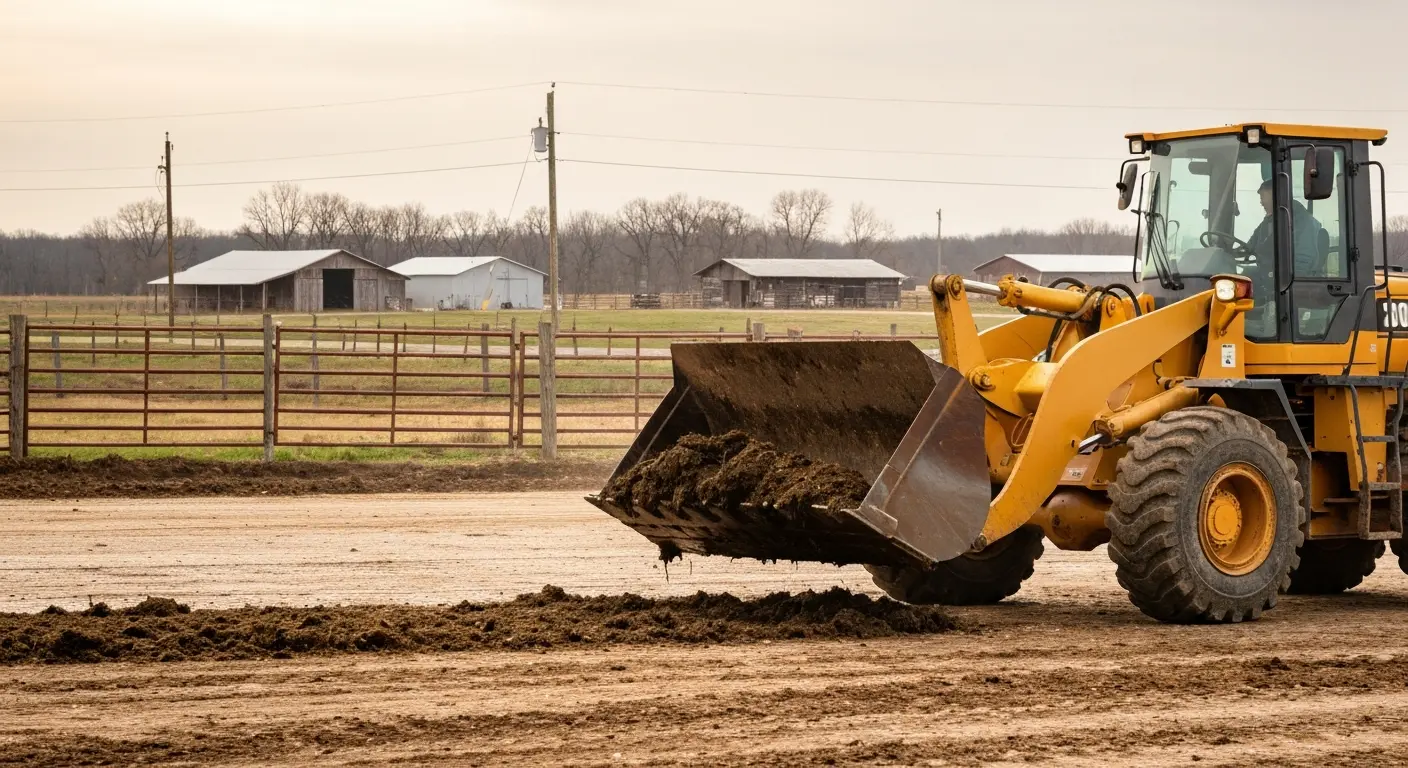
Front-end loader removing manure from feedlot near central Missouri farm
Lagoon and Tank Pumping
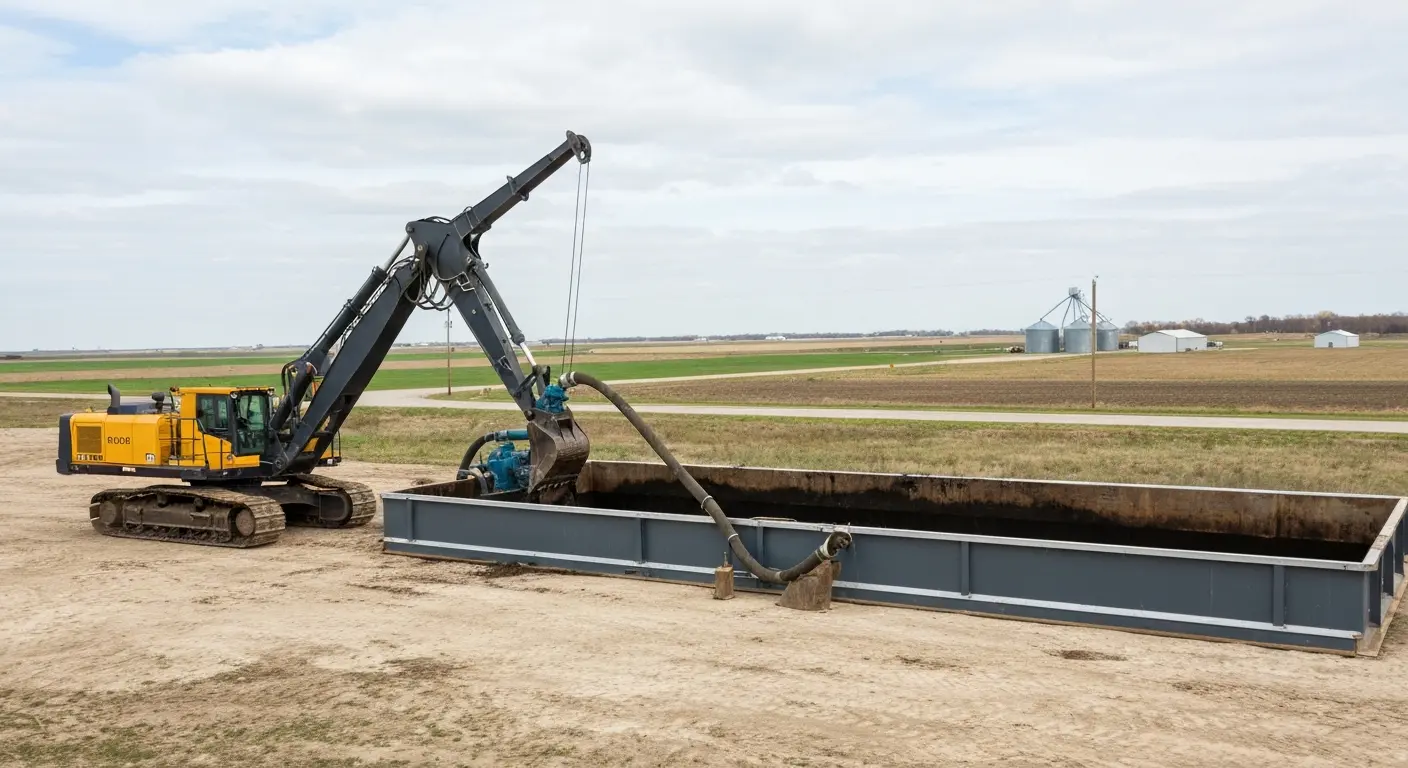
Dragline and pump equipment removing liquid manure from holding tank
Agitates and pumps liquid manure from dairy lagoons and confined operation holding tanks into tank wagons or field applicators.
- 60+ foot boom truck capability
- Drag-hose systems for long-distance pumping
- Agitation for proper nutrient mixing
Nutrient Management Planning
Coordinates soil testing, manure analysis, and field mapping to apply manure at rates that match crop nutrient needs without over-application.
- GPS-guided variable-rate application
- Field-by-field application records
- Regulatory compliance documentation
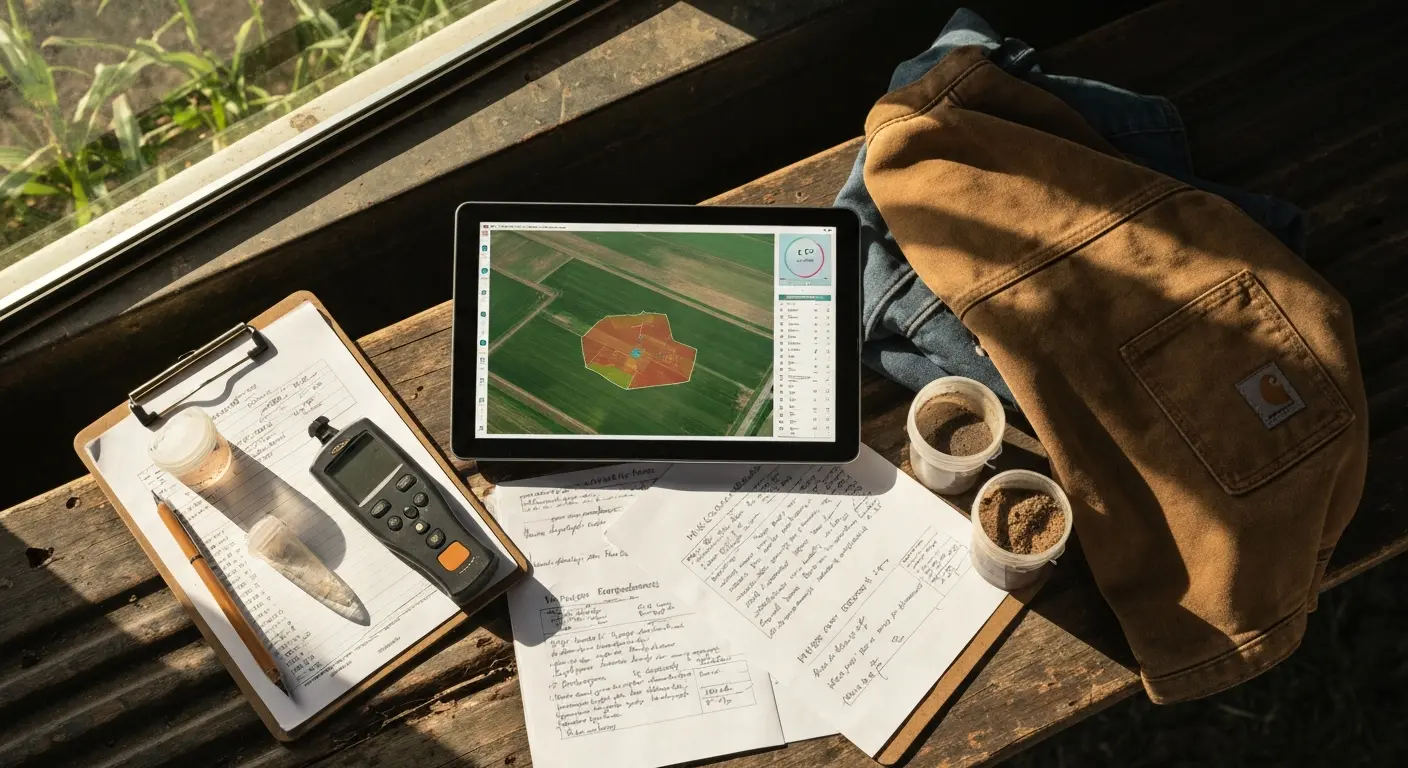
GPS mapping and field documentation for nutrient balance planning
Why It Matters
Proper manure handling protects water quality, maximizes nutrient value, and maintains regulatory compliance in Missouri.
Environmental Protection
Manure must not pollute surface water or groundwater. Improper application can contaminate wells, streams, and agricultural drinking water sources. Our nutrient management planning prevents excessive nitrogen and phosphorus in fields.
Missouri requires farms to prevent applying nutrients at rates exceeding soil capacity and crop needs. Our records and application verification meet state compliance standards.
Maximizing Nutrient Value
Manure contains nitrogen, phosphorus, and potassium that substitute for purchased fertilizer. Proper land application and timing preserve these nutrients before soil incorporation and crop uptake.
Equipment calibration, field timing, and incorporation practices reduce ammonia volatilization and nutrient loss, saving you fertilizer expense.
Regulatory Compliance
Operations with 700+ dairy cows or equivalent livestock require permits from the Missouri Department of Natural Resources. Smaller farms must still follow manure management best practices to avoid liability.
We maintain documentation of removal dates, field application locations, nutrient rates, and incorporation timing. These records protect your operation during inspections and demonstrate good management practice.
Serving Missouri and Surrounding Areas
We work with cattle, dairy, equine, and mixed livestock operations throughout Missouri.
Custom Farm Services Partnership
As an agricultural service provider, manure removal complements our hay sales, mowing, air seeding, and other custom field services. We understand farm logistics and minimize operational disruption.
Equipment and Expertise
We own and operate specialized equipment needed for Missouri farming: front-end loaders, dragline pumps, boom trucks, drag-hose systems, and tank wagons. This owned equipment means we don't depend on contractor availability delays.
What Is Proper Manure Removal for Livestock Operations?
Proper manure removal involves collecting accumulated manure from barns, pens, or lagoons and applying it to fields based on crop nutrient needs and soil test results, not just availability.
- Scrape or pump manure from housing or storage
- Transport to fields or temporary storage with equipment
- Test soil and manure nutrient content
- Apply at rates matching annual crop nitrogen or phosphorus removal
- Incorporate manure into soil to reduce odor and nutrient loss
- Document field location, date, and amount applied
This approach protects water, preserves nutrient value, and demonstrates compliance to regulators.
Frequently Asked Questions
Common questions about manure removal in Missouri
What is the difference between solid, semi-solid, and liquid manure?
Solid manure has most water removed and comes from bedded barns or dryland storage. Semi-solid contains some moisture and may be from open lots or partial drainage. Liquid manure is stored in lagoons or tanks with minimal solids and must be agitated before pumping.
Do you handle both dairy and beef cattle manure?
Yes. Dairy operations typically use slurry or lagoon systems with high liquid content. Beef feedlots and cattle ranches produce solid or semi-solid manure. We manage both through different equipment and techniques matched to your operation type.
Does manure application require a permit in Missouri?
Operations with 700+ dairy cows or equivalent confined livestock require a permit. Smaller farms don't need a permit but must follow manure management best practices and prevent water pollution. Contact your local NRCS office or MU Extension for guidance on your farm size.
Can manure be applied in winter?
Winter application is challenging. Frozen ground, snow cover, and wet soil increase runoff risk. We typically apply during spring, summer, and fall when soil conditions allow proper infiltration and the risk of water contamination is lower.
How is nutrient application rate determined?
We base rates on soil testing and crop removal. If soil already contains excess phosphorus, we apply manure to meet only nitrogen needs. If phosphorus is low, we apply to meet nitrogen needs. This approach prevents nutrient saturation and groundwater contamination.
What equipment do you use for manure removal?
We operate front-end loaders for solid manure scraping, dragline pumps and boom trucks (60+ feet) for liquid manure, drag-hose systems for long-distance pumping, tank wagons for hauling, and GPS-guided application equipment for field placement.
DISCOVER WHAT OUR CUSTOMERS HAVE TO SAY ABOUT US
REVIEWS
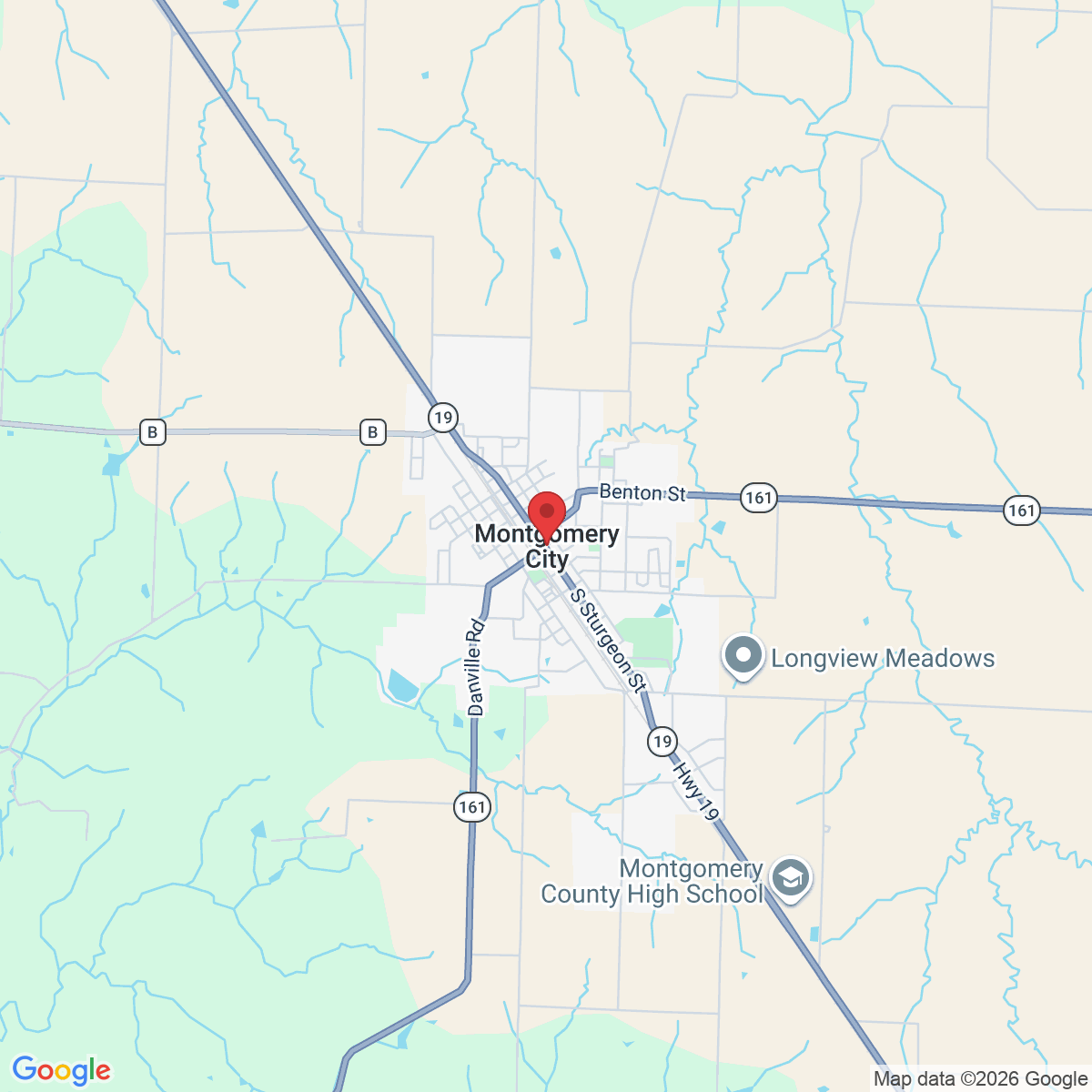
proudly serving these areas
Missouri, MO
Illinois, IL
Lake of the Ozarks, MO
St. Louis, MO
Warrenton, MO
Wildwood, MO
Troy, MO
Hawk Point, MO
READY TO take the next step?
get a free quote TODAY!

QUICK LINKS
our services
service areas
operating HOURS
Mon: 12:00 am - 11:59 pm
Tue: 12:00 am - 11:59 pm
Wed: 12:00 am - 11:59 pm
Thu: 12:00 am - 11:59 pm
Fri: 12:00 am - 11:59 pm
Sat: 12:00 am - 11:59 pm
Sun: 12:00 am - 11:59 pm